Showing posts with label Football. Show all posts

Monday, 14 December 2015

EU Referendum: Another Reason Why June 2016 Poll Is Unlikely

Despite frequent articles from journalists of the legacy media suggesting there could be a referendum as soon as June 2016, the Electoral Commission has made it perfectly clear (page 17) this cannot be possible as ten months must elapse between Royal Assent of the Referendum Bill and the poll.

The Electoral Commission recommends a six-month gap between passing of the law and the start of the referendum campaign. If then the referendum campaign includes designation, the combined campaign period would need to be four months, (page 6). Four months plus the six-month gap gives us the ten months.

With the Referendum Bill unlikely to receive Royal Assent before Christmas and the recommendation of a ten month window, as highlighted by this blog and EU Referendum, all but rules out a 2016 poll and certainly it rules out a June 2016 poll.

The Electoral Commission is a statutory body and thus its recommendations can be subject to judicial review. Recommendations have to be taken seriously as evident by its statutory advice over the referendum question change. The lack of reference to the Electoral Commission's recommendations by the UK media does bring into question its integrity and its less than candid nature.

Yet in addition to the Electoral Commission recommendations, another factor comes into play regarding a June 2016 referendum and it is one which has a more political significance than a legal one.

June 2016 is when UEFA is hosting its football championships in France. The draw, which involved three of the four Home Nations was made on Saturday, where one of the fixtures will be England versus Wales. Here then we will have a month of football in European wide tournament held in France - an EU member state which is a crucial and pivotal part of the EU.

With media build up to a tournament involving England it would seem inconceivable that Cameron is going to dump a referendum on the UK during a month long celebration of football particularly when a significant number of the electorate will have priorities more focused in a warm month on football, beer and barbecues.

A referendum held in these circumstances would almost certainly impact on turnout, and the results could be heavily influenced by how successful, or indeed not, the Home Nations performed during the tournament. Cameron would not want the referendum result to be influenced on the uncertainties of the mood of the nation over the fortunes of the unpredictability of football.

How a football tournament can influence politics can be seen during the debate on Scottish devoltuion in the 1970s:
The sharp rise in nationalist support, which registered in the first of the two general elections of 1974, prompted the Labour Prime Minister, Harold Wilson, to make a commitment to devolution.

On June 22 Labour's Scottish executive met to ratify the Downing Street proposals on devolution. Unfortunately this was also the day of the Scotland V Yugoslavia World Cup football match and only 11 members turned up. Most of those who stayed away to watch the football were pro-devolution. This gave the anti-devolutionists their chance to throw out the proposals.
Perhaps learning the lesson we see four years later, in 1978, that the Hamilton by-election was moved to Wednesday 31st May 1978 as the opening game of the 1978 World Cup was on the Thursday 1st June. This was the last time a by-election was not held on a Thursday.

In addition to Euro 2016, we see that a month later in August the 2016 Olympic games will be held in Brazil (and the Paralympics in September). Following on from a media narrative on how England and the other Home Nations have conducted themselves, attention will then turn to the Olympics with the lead up consisting of headlines of variations on the obligatory theme of whether the stadia and infrastructure has been built yet.

2016 will be a summer of sport. With a Prime Minister having such a weak hand in terms of his EU referendum it's very unlikely he is going to risk having his message overwhelmed by a narrative concerned with other priorities.

Saturday, 5 September 2015

Is Darts A Game Or A Sport?

Ironically when the popularity of darts has suffered from the decline in the numbers of pubs with a changing culture, the above question still resonates within pub conversation.

So is darts a game or a sport? This blog generally concludes that for something to be considered a sport it has to fulfill the following two crtiera:
  • Is the result subject to boolean outcomes, i.e. either win or lose.
  • Does it require physical activity and does such continued physical activity improve the potential of winning boolean outcomes.
Clearly examples such as football, rugby, cricket and athletics meet this criteria of being a sport. Regarding darts though "physical activity" is not a requirement, so it only fulfills the boolean outcomes option making it come into the same category as snooker, billiards, bowls, chess, backgammon and Subbuteo. This makes it simply only a game. The physical activity in addition is necessary to elevate it to a sport.

Conversely robust physical activity without boolean outcomes but instead subjective marking such as ice skating and synchronised swimming can only be considered an activity, not a sport. Subjective marking is notoriously subject to bias and corruption.

Boolean outcomes and physical activity combined is something to consider given the challenges ahead in 2017...We either win or we don't.

Tuesday, 26 May 2015

Scotland

Having returned from Scotland over the weekend, may we suggest that if it wants to maintain its reputation as "a clean, unspoilt destination with beautiful scenery", which generates at least £4bn per year in tourist spending, it stops desecrating all that lovely scenery with wind turbines.

We have never seen so many turbines - the presence of so many completely destroys any natural beauty the Scottish countryside has.

However on the brighter note we took the opportunity to visit parts of Scotland we hadn't got around to seeing previously. We had a little day trip to Dundee, despite the rain, and found our way to Tannadice Street home of both Dundee FC...
  
 ...and Dundee Utd FC.

They're so close together on the same street it's ridiculous (Dundee is on the right, Dundee Utd is just down the road on the left). 

And then we visited the Falkirk Wheel, which is an amazing piece of engineering - the 21st century upgrade of the Anderton boat lift in Cheshire:


And with engineering in mind, we note that passing across the Forth Road Bridge progress is being made on its replacement which is due to be finished next year. The reason for the replacement, despite being built in the 1960s, is the old road bridge is falling to pieces. What a contrast to the Victorian rail bridge, opened in 1890 which...er...is still there and needs no replacement. And is the bridge where the SNP are proud to stand outside.

Sunday, 8 February 2015

Football Thuggery

Whatever you do, don't take an inflatable football into Forest Green Rovers' ground otherwise you can expect "the Treatment" from the stewards...

Stewards at Forest Green ejected a Grimsby Town fan from the ground before kick off - apparently for playing with an inflatable football. 
Several people - including at least six stewards were seen to physically eject the man from the ground, and one appeared to have him in a headlock.

Sunday, 30 November 2014

Penny Mordaunt: Debasing The Political Debate?

It's a rather sad indictment of the media's coverage that MP for Portsmouth North Penny Mordaunt's joke speech in the Commons makes the front page of a Sunday newspaper. This at a time when a proper debate is ongoing in the wake of Owen Paterson's and Cameron's speeches earlier this week regarding our membership of the EU and immigration.

We're not sure that a slightly silly speech by Penny Mordaunt as a "bet" on behalf of her constituents warrants front page coverage. But we have long given up on the media having a sensible debate on anything serious as Evan Davis demonstrated on BBC's Newsnight earlier this week.

However this blog rather more fondly remembers her gallant efforts to remove a certain Andrew Andronikou as administrator to Portsmouth Football Club, efforts which turned out to be successful.

Andronikou had previously been an administrator at Swindon Town FC and memories of his time there are less than kind to this blogger. If we were to be very generous we could consider that he had a questionable integrity. In our original post we slightly pulled our punches and it is the only post which has been published on here that was "legalled" before publishing.

So here on TBF we are entirely grateful for the efforts of Penny Mordaunt...

Saturday, 22 November 2014

England Flags And Other Matters

"I took her to a supermarket...I said pretend you've got no money, she just laughed and said oh you're so funny. I said yeah? Well I can't see anyone else smiling in here." Jarvis Cocker, Common People.

Without being presumptuous it must have been a rather surreal week for Dan Ware. There he is going about his daily business, his only "crime" being that his house is draped in England flags with a white van parked in his driveway and he becomes, through no fault of his own, the centre of a political scandal and resignations.

It's rather ironic for a chap who himself admits he does not vote that he has created more political waves by hanging up an England flag than casting a vote via the ballot box. How very revealing...

Labour MP Emily Thornberry, who tweeted a picture of the house, then compounded the feeling that Labour et al are out of touch by attempted to excuse her faux-pas by claiming that it was an "amazing image". The phrase "you should get out more" springs to mind here. Not unsurprisingly Ed Miliband does not come out of the episode well either as Labour, run by a metropolitan elite, comes under ever increasing scrutiny that it is losing its core working class support.

It's also interestingly symbolic that the flags on Mr Ware’s house were of England, not of the UK, which he had flown to celebrate the World Cup:
The father of four said he had simply put up the three St George flags to celebrate the World Cup, and that it was 'not political'.
Here we see an example of this unappreciated and largely unnoticed change in recent years of the increasing tendency of England football fans no longer universally flying the Union flag of the nation team but instead waving the flag of St George. As a national sport, national tensions and issues tends to spill out onto "the terraces" thus it can be a good indication of the nation's woes - a canary down the mine.

Local rivalries are a classic example - the bitterness surrounding Chesterfield against Mansfield is a reflection of the 1984 miners strike and the reasons behind the intense rivalry of Liverpool and Manchester Untied is laid bare by the reference to the Manchester Ship Canal on United's badge.

Thus if we look back to the 1966 World Cup final, it is curious from a modern perspective (aside from England actually winning a trophy) to see the number of Union flags being waved among the crowd in support of England:

A practice that continued into the 1970 World Cup in Mexico - here England against Brazil...


...right up to the 1990s. Here are England fans in Italia 1990:

And against Germany in the World Cup 1990 semi-final:
Yet fast forward on 10 or 15 years and we see a complete change, hardly a Union flag in sight. The contrast couldn't be clearer.
The World Cup in Japan 2002:
...in 2006:
...and in 2010 in South Africa:
The year of change is relatively easy to pinpoint, it happened almost overnight - 1996, or more specifically the Euro '96 UEFA tournament which was held in England and they played all their games at Wembley.
Euro '96 was a watershed moment where very significant numbers of England fans took to waving the St. George flag and widely ditching the Union flag (below):
 
The reasons why are less easy to pinpoint. It appears to have been a combination of a reasonably successful football tournament for England where it had a very good chance to win it, the success of the song "three lions", the changing dynamics of football fans with the establishment of the Premier League four years earlier and the embarrassment of the Union flag being tarnished with hooliganism a year earlier. All of which was topped off with an added dash of free England flags and hats handed out by The Sun newspaper.
In addition in 1996 there was also the context that the obviously incoming Labour government, against the loser Major, was openingly advocating devolution, particularly to Scotland as promised by Blair's speech in Blackpool 1996:
I vow that, with the consent of the people, we will have devolved power to Scotland, Wales and the regions of England...
Devolution was always a Pandora's Box - give politicians power (in this case SNP) and they want more. Labour is now reaping the "rewards" for unleashing consequences that they didn't understand nor anticipated. In Scotland it has lead to the independence referendum, which despite the "yes" camp losing has not settled the issue. Labour is also now under pressure from the SNP at the next election. And in England it has lead to a rise of Englishness which even Miliband acknowledged awkwardly in 2012. He put Euro '96 down to...
Since Euro 96, English football fans have helped to reclaim the flag of St George from the BNP.
That may have been the unintended consequences, but Miliband overlooks that instead of reclaiming the flag of St George from the BNP, it is a demonstration of the Union fragmenting and England reasserting themselves.

In this respect Labour has an "England problem" where Miliband's "long-term problems will come from south of the border, and in particular how he deals with the question of Englishness." And this brings us back to the real issue of Emily Thornberry's misguided tweet.

Friday, 27 June 2014

Article 50: The Premier League Of Exits (Part 1)

With the England football team's, not entirely unexpected, dismal early exit from the World Cup in Brazil, we see the usual media post-mortem analysis of where it all went wrong. Two themes always emerge when attempting to analyse what went wrong; that footballers are paid too much and that there are too many foreigners in English football.

However given England's international record since 1950 both theories can be seen to be clear fallacies. 1966 aside, England's record in international tournaments has generally been very poor. England has never reached a final on foreign soil and they have won only five knockout games in any World Cup played outside their own country; none of them against any so-called 'football superpowers' such as Germany or Italy.

This poor record occurred during the maximum wage era - ended by the landmark Eastham case in 1963 - as well as during the far more prosperous English Premier League (EPL) incarnation. And no one could argue that a half-fit Luis Suarez playing for Uruguay against England only showed passion because he is on minimum wage when playing for Liverpool. Thus that the fault lies with players' lack of passion due to being paid too much doesn't stand up to scrutiny.

The other criticism is of too many foreigners in the EPL (foreign players currently make up over 60%). However when the English leagues consisted of almost only British players during the '70's and '80's it's worth noting England failed to qualify for the World Cup in 1974 and 1978, and as for the European Championships in 1988...well that's best forgotten.

England's record has been largely abysmal regardless of how many or how few foreigners play in the English game. And as Soccernomics argues England's record has actually improved since 1992 (the beginning of the EPL) - averaging 1.69 points per game up from 1.4 per game pre-1992.

Yet the obvious fallacies behind the proposed reasons of England's poor international record doesn't stop the likes of the 'award winning' Telegraph football correspondent Henry Winter putting forward 'solutions' to England's perennial abject performances. He complains bitterly:
When England were blown away by the fast, intelligent, ruthless movement of Germany in Bloemfontein at the last World Cup four years ago, this newspaper carried a “10-point plan to save the face of English football following shame in South Africa”. Only three of the points have been achieved, leaving little surprise that England continue to lag behind more sophisticated footballing nations.
And one of his solutions that was not adopted?
The issue of quotas, suggested in Point Eight of “Six plus five adds up”, focused on the influx of foreigners into the Premier League and the blocking of the pathway for younger English players, an issue at the heart of Greg Dyke’s FA commission.
It seems to have escaped the 'award winning' Mr Winter's attention that such quotas, even if they worked, are against EU law. And nor is this an obscure EU ruling. Instead it is one of the most well known infamous moments in English football history - the Bosman ruling. And not just Bosman but also ECJ judgements regarding Dona, Kolpak and Simutenkov.

One of the consequences of Bosman in particular was that it prohibited domestic leagues in EU member states, and UEFA, from imposing quotas on foreign players to the extent that they discriminated against other EU states. The judgement was hardly a surprise given that free movement of people is one of the fundamental freedoms of the Single Market - based on what is now Article 45 (2) of the Lisbon Treaty which established the rights of EU nationals to work on a non-discriminatory basis in any Member State.

Previously UEFA had a rule which prohibited teams in its competitions, namely the Champions League, Cup Winners' Cup and UEFA Cup, from naming more than three "foreign" players in their squads for any game - a rule which had led to the embarrassing defeat by Barcelona of Manchester United in 1994. After the ruling, quotas could only be applied to non EU-players only.

Mr Winter should (and I suspect does) know better but it's revealing that he fails to acknowledge this. Thus it appears that it is not just Telegraph political correspondents who have myopia when it comes to the UK's membership of the EU but football ones as well.

The Bosman ruling had profound consequences right across the EU - in all sports but one of its greatest impacts was felt in the Premier League. To maybe understand why, we need to revisit the consequences of the establishment of the Premier League in the early '90s.

The Hillsborough disaster in 1989 was a watershed in British sport and it essentially resulted in two main legacies - safer stadiums and its more dubious cousin the birth of the Premier League. 

Football in the UK has largely been governed since the 19th century by an uneasy alliance between two bodies; the Football Association (FA) and the Football League (FL).

The FA can rightly claim to be the first such football body in the world which not only first codified the rules but helped develop the popularity of the game. And, not unusually for a Victorian sporting institution, it has always retained an amateur ethos - a determination to remain a "purity" different from commercial interests. It was a public school cocooned world.

This 'purity' was challenged in the late 19th century by the establishment of the hugely popular football league, a league competition led mainly by the rise of working-class northern clubs who could not afford such luxuries as 'amateurism'. Professionals they had to be out of necessity. In very simplistic terms such a divide between the FA and the FL can be seen as a north/south one, not too dissimilar to the divide which was more explicitly expressed in the form of two sets of codes in rugby.

Most other countries in the world which started from scratch avoided this seperation of the governing body and the League. Instead they established a single football federation governing the lot...this mistake, not replicated by other countries, would come back to haunt the UK.

From the start the FL was concerned about ensuring a degree of equality between its member clubs - on almost a socialist model it wanted to ensure that money was divided equally within the whole league structure on the basic premise that every club needed each other for a basic competition to exist. A model that largely worked for circa 100 years.

But with the influx of television money in the 1980s the bigger clubs (then known as the big five) in the top division wanted to break away from the FL's rigid formula of distributing money throughout the leagues and instead keep all the money for themselves. Despite initial resistance from the FA the big five's opportunity to breakaway came via Hillsborough.

Lord Justice Taylor, in his Final Report, had identified that one of the many failings in football at the time was due to a lack of leadership, a lack of vision, due to the inherent archaic conflict between the FA and the FL. What football badly needed was one strong governing body. In the spirit of Lord Taylor's report the FL produced a document called, one game, one team, one voice. It proposed an end to football's historic divisions and the establishment of one joint board, six members from the FA and six for the FL to run football.

However the FA, with self interest most acute, saw this as 'parking tanks on its lawn' and thus in response betrayed their own game by instead allowing the breakaway of the top division with its permission in a selfish attempt to destroy the power of the FL.

The result was a Premiership division, under FA governance, with clubs standing on the threshold of undreamt riches intoxicated by the injection of further money by Sky television. No longer would money have to be distributed throughout the leagues, instead the PL kept most of it if not all. But the unintended consequence was that the FA created a monster which it could no longer control.

This PL monster, now greedily independent of the rest of the football league, was then given a substantial steroid injection by the Bosman ruling in 1995.

After the ruling, a player was free to leave as soon as his contract expired. Thus power moved away from clubs towards players; they could now demand very large signing-on fees and salaries, on the basis that the club they were joining had not had to pay a penny in transfer fees. Clubs became powerless to stop their best players leaving at the end of their existing deals. Wages soared and in the UK this was funded by more and more television money. Not expectantly this attracted ever greater numbers of foreign players into the EPL - over 1,500 in the last 20 years and most from the EU. 169 players have come from France alone.

Yet while we take the view from a purist football fan perspective the PL has been negative innovation in destroying the integrity of the English league system, we recognise that the PL is a major contributor to the economy, we cannot avoid the fact that the economic figures it generates are staggering.

In 2011/12 for example the revenue of the 20 Premier League clubs was over £2.3 billion, while five clubs each generated revenue greater than that of the entire First Division twenty years previously.

Last year the contribution of the EPL clubs alone - just 20 of them -  to the Exchequer was over £1bn. Just Premier League football in Manchester on its own rakes in the equivalent of an Olympic and Paralympic Games combined for the economy every four seasons and English clubs spent a record sum last summer in transfers amounting to a total of more than half a billion pounds.

The financial behemoth that is the EPL means it is extremely popular with both domestic and foreign fans. In England, for example 32 per cent of the adult population state that they are actively engaged Premier League football. And it was a sector which remained resilient when the recession struck.

And in addition the EPL plays an important part in British tourism. In 2012  there were nearly a million foreign football tourists who visited the UK spending £706million – or £785 per fan - around £200 more than the average spend for a visitor to the UK.

The following of the Premier League globally is 1.46 billion – or 70 per cent of the world’s estimated 2.08 billion football fans. The EPL therefore, liked or not, is a most potent instrument of soft power the UK possesses. As an EU Commission paper noted in 2007-08:
...the Premier League has become much more than just the United Kingdom’s most popular regular sporting competition. It has also become an important economic agent, with a significant impact on employment, GDP and national and local economies. A number of related industries have benefited from the Premier League’s strength, including broadcasting, marketing and other communications industries, and the travel, tourism and hospitality industries. Premier League Clubs have become the social focus of many urban communities and are often the most prominent symbol of their cities in the UK and around the world.

The economic success of the Premier League generates significant taxation revenues for national and local government, giving the Government and local authorities a direct interest in the continued economic health of our competition. It is therefore important to bear in mind that, in considering the impact of the EU on sport, the relevant policies include employment, the internal market, economic development, trade, judicial and legal services, social inclusion, and regional policy as well as sport itself.
Thus if we are to win a referendum, reassurance needs to be made that the world's most watched league is not adversely affected.

What Margaret Thatcher seemingly failed to appreciate, but largely her Prime Ministerial successors did (albeit some superficially, not naming names - Cameron) is that the majority of football fans, and indeed sports fans in general, are above all else taxpayers and voters. Thus millions in the UK who follow the EPL need to be onside in order to win.

The Bosman ruling is by no means the only EU interference in domestic sport and interestingly there has been long running disputes between the international regulator FIFA and EU law. These we will address in part 2.

Sunday, 23 March 2014

Farage Compares UKIP To Millwall Football Club

Autonomous Mind today highlights the contrast in coverage of the Conservatives and the coverage of UKIP. The UKIP’s stories clearly concentrate on the antics of leader Nigel Farage which is hardly surprising given that the man is the party and the party is the man.
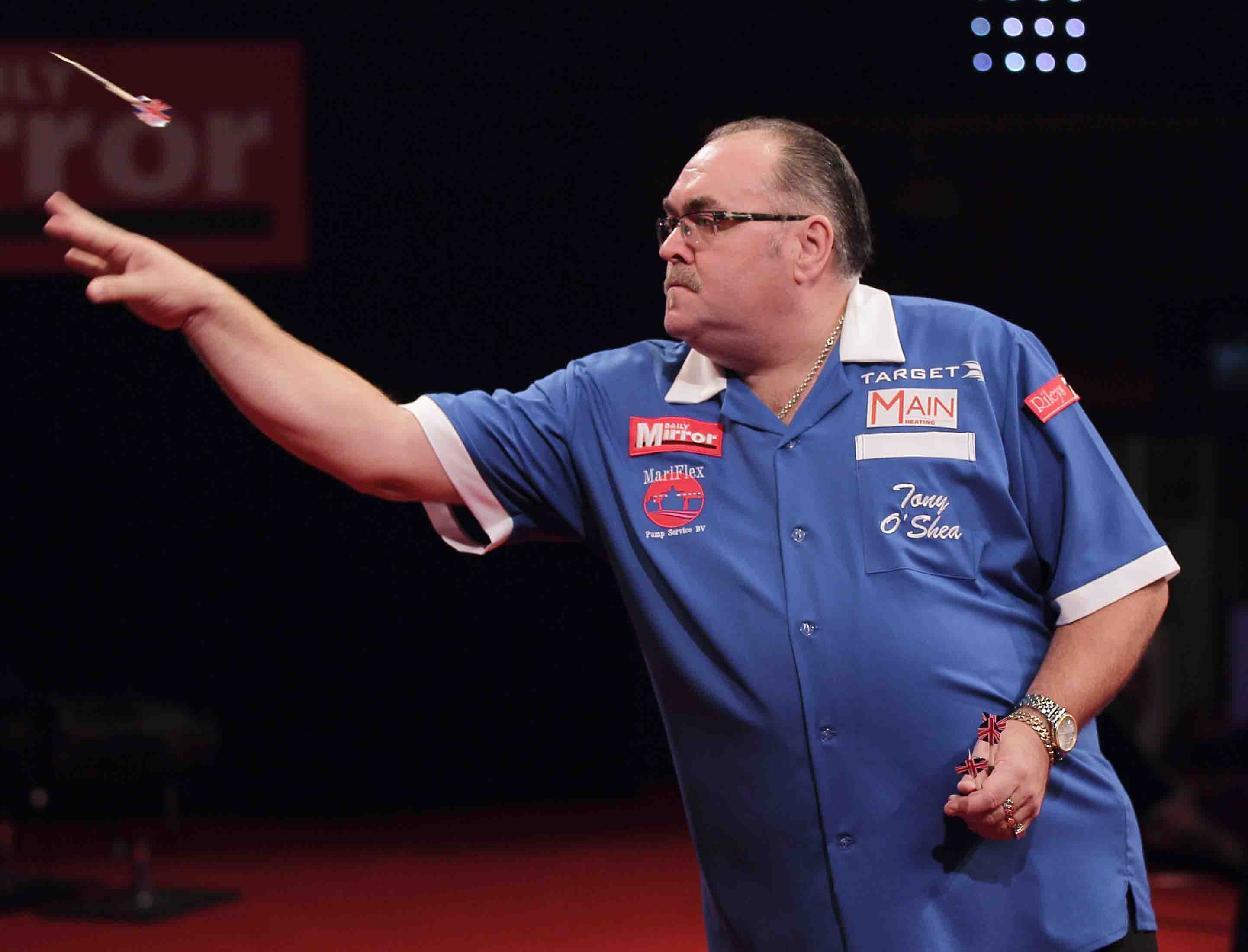
As a consquence it’s not UKIP policies that take precedent but Farage himself still having to justify and deny allegations yet again about his private life – all the while consuming yet more copious quantities of alcohol.

Now it’s true that the Mail on Sunday article portrays a far from sympathetic tone, for example this particular paragraph:
[Farage] had no time for the homeless man who tried to sell him The Big Issue, ignoring him completely.
After the bedraggled toothless chap eventually gave up and trudged off, Farage quipped: ‘That’s the first Big Issue seller I’ve come across for a while who isn’t a Romanian immigrant!’
He doesn’t ‘do’ compassion.
In another article we have this:
UKIP leader Nigel Farage has come under fire for using taxpayers' money to pay for a swanky penthouse suite in Brussels.

The Euro MP, who has previously criticised the European Union for its wastefulness, is renting the luxury property in one of the most exclusive addresses in the Belgian capital.
In many ways it comes as little surprise that newspapers adopt a hostile tone. When a party aims to overturn the establishment status quo in terms of EU membership, the cosy alliance of the three biggest parties and the media’s self-interest in maintaining that status quo, any upstart is undoubtedly going to be treated unfairly.

The crucial strategy when fighting the status quo is to become grudgingly respected if not liked. This can be achieved by dealing with policy detail, establishing oneself as an authority on a subject (in UKIP’s case the EU) and - in contrast to others - being seen to be above board in honesty; for example not employing your wife, and mistress, on the taxpayers' expense.

Thus that UKIP would be subjected to smears is no surprise. However shallow smears can always be conteracted by substance. Without substance empty rhetoric is no defence.

The crucial point with UKIP is how much are smears and how much is true? Ironically we turn to Farage to answer this question. He does so by comparing UKIP to Millwall Football Club:
‘We’re like Millwall Football Club, “Everyone hates us and we don’t care!”
Firstly I would suggest that as a leader of a political party it's not entirely conducive to revel in the principle of "everyone hates us, we don’t care". It tends not to result in many votes.

It's true that Millwall's famous chant of: "no-one likes us, we don't care" is a masterpiece of defiance, in tune I guess with some aspects of UKIP which Farage indulges in. Yet conversely it is also a masterpiece of irony. If Millwall supporters truly didn't care, their club would not be defined by a chant that said they didn't.

But more importantly why has Farage compared UKIP to Millwall at all – a club that is associated with thuggery and violence? Even those of a non-football persuasion are fully aware of Millwall’s toxic reputation. Is Farage suggesting they’re all angels simply misunderstood?

We do not doubt that many Millwall fans are normal law-abiding supporters, unfortunately tarnished as they are by their club's reputation. Yet as a club they didn’t earn their infamy through unfairness.

No-one sat looking at a map and stuck a pin highlighting South Bermondsey saying let’s just pick on these chaps for no reason. Millwall earned their reputation. They can complain all they like that they are singled out but a mirror is sometimes useful. Yes their coverage is often unfavourable but a significant number don't do the club any favours.

So in many ways Farage's analogy was correct in a way he probably did not intend. Many of those in UKIP are hardworking volunteers let down by a minority. With no exit plan, a lack of a decent website, a party bereft of policies that are not “drivel” is it any wonder that the media have little else to concentrate on?

So a great deal of one of the Daily Mail articles contains Farage having to deny that he had an affair with Annabelle Fuller:
Has he had sex with Annabelle Fuller? ‘I don’t think we should go into the grisly details.’

Has he slept with her? ‘No.’ Has he kissed her? ‘No. When you work in a tight team, I understand why people might get the wrong idea.’
Why hadn’t he denied it immediately in the European Parliament? Farage falls back on his best weapon: wit. ‘There’s an old saying, if you pick a fight with a chimney sweep you get covered in soot!’
A denial despite that this has been an open secret in the party for years and Fuller herself has openingly boasted about said liason to UKIP delegates in the past. Farage is being less than candid here. Ultimately regardless of Farage's unconvincing response the entire episode detracts from any kind of important issues that UKIP might campaign on. His personal life, paid for by the taxpayer is becoming a hinderance.

And still there is much more to be released about Farage and his entourage. That they have not been made public in media is down to use of Carter Ruck. Thus we suspect that some of the current "smears" are schadenfreude on behalf of journalists who have been on the receiving end of Carter Ruck when investigating numerous alleged misdemeanours - resulting in non-disclosure settlements. For some journalists, with fingers burnt, it's become personal.

Like Millwall, there are smears and facts – and often the former depends heavily on the latter. Criticising those that point out that the emperor has no clothes does not necessarily make them incorrect however uncomfortable the truth.

In the spirit of Farage we'll use another football analogy - we may criticise the manager if he's not up to it, but to do so does not make us a lesser supporter of our club.

Tuesday, 15 October 2013

A Day In The Life...

Three police officers whose "honesty and integrity" have been questioned by the police watchdog will not face disciplinary action over allegations that they lied to try and discredit Andrew Mitchell at the height of the plebgate affair.
So reports the Guardian. It was pretty clear at the time that the policeman's account was somewhat inconsistent, not that means anyone will be disciplined. Interestingly though the former Tory whip states:
"It is a decision which will undermine confidence in the ability of the police to investigate misconduct when the reputation of the police service as a whole is at stake.
Well yes but it's hardly anything new, but the only reason it makes the news in this instance is precisely for the reason he is a former Tory whip. Mitchell continues:
"My family and I have waited nearly a year for these police officers to be held to account and for an apology from the police forces involved. It seems we have waited in vain."
At this point one might consider that those of Liverpool have waited nearly 25 years for police officers to be held to account in one of the biggest police corruption scandals in UK history. A cover up that went right to the top of the political tree and remained so for years. Mr Mitchell's concerns are not police corruption per se but those that affect him directly

As someone who has been stopped and searched under a Section 60 (a policy introduced incidentally by the Tories) more than once and had £20 notes ‘confiscated’ from my wallet because “they could potentially be used as weapons” the disclosure that policemen have; “honesty and integrity” issues comes as no surprise whatsoever.

Friday, 6 September 2013

Notes From A Small Island

“Being powerful is like being a lady. If you have to tell people you are, you aren't.” Margaret Thatcher
Perhaps it's me but I find this latest response, to Russian jibes, from Cameron just deeply embarrassing. Where have all our dignified statesman gone...?

Perhaps, unbelievably, the England national team might manage a more dignified defence tonight of our country than Cameron.

Wednesday, 8 May 2013

"Limited Package Of Laws?"

 
I truly can't be bothered to devote much of my time to providing a critical analysis of this pathetic article by the Telegraph;
A limited package of new laws reflects the approaching general election, and points the way to Conservatives and Lib Dems living separate lives, says James Kirkup
Only to say...in a word; Brussels.

It comes to something when a football manager's resignation genuinely has more significance than the Queen's speech.

Wednesday, 27 March 2013

Invest In The Eurozone?

While reading in the Telegraph a report of the inept performance that was England last night, one is amused by the adverts that appear underneath (pictured above)

One wonders if it's 5 days early, a Freudian slip by the pro-EU paper or the Telegraph's odd way of mocking the Cypriots?

Sunday, 10 February 2013

Quote Of The Day

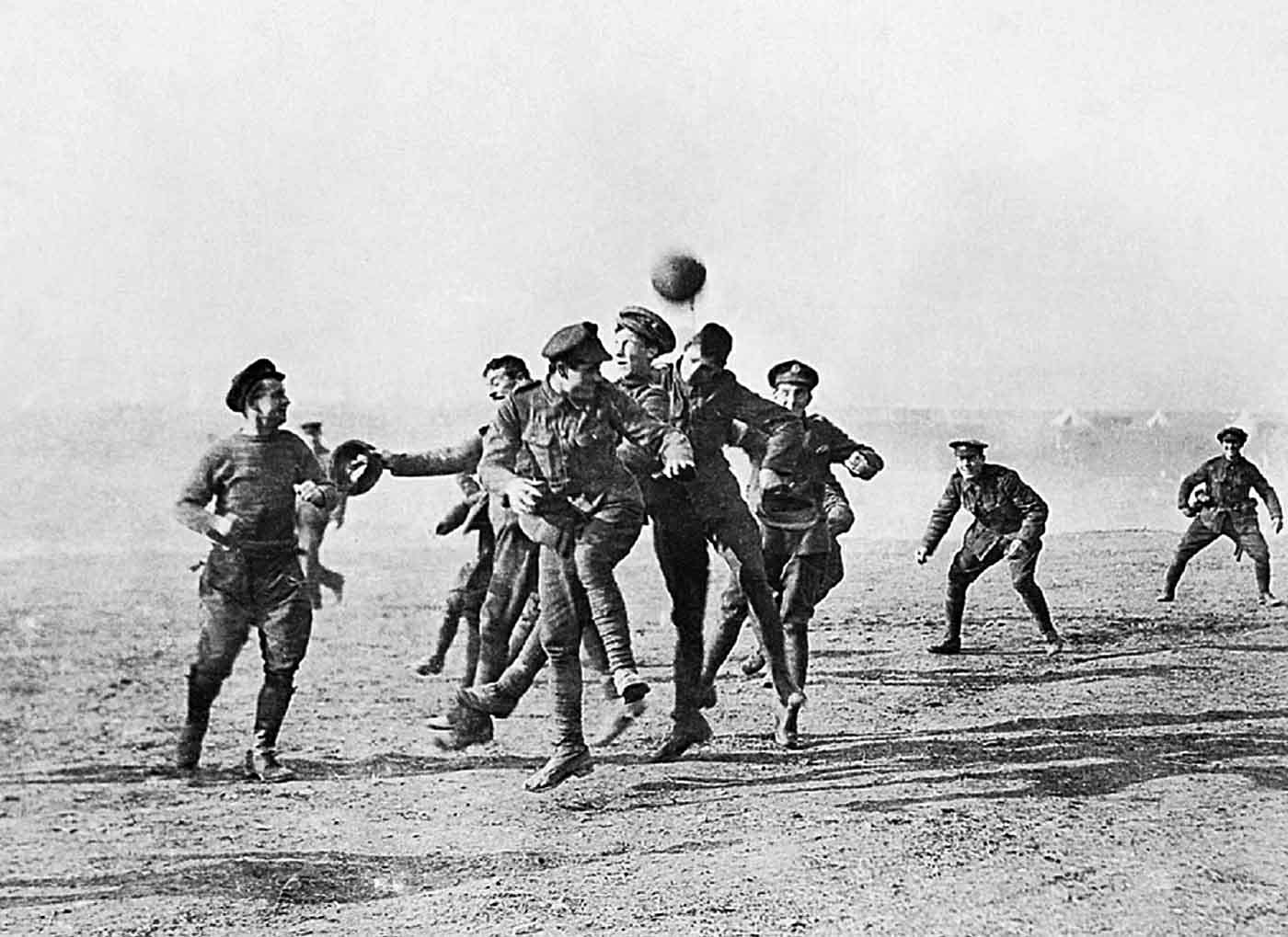
Just seen this from a Guardian report on Friday about recreating football matches played during the Christmas truce of World War I as part of next year's centenary celebrations. Andrew Murrison, Minister for International Security Strategy, in the Ministry of Defence said (my emphasis):
...that staging a football match in Belgium on the battlefields where soldiers had briefly put down their weapons was "a no-brainer in terms of an event that is going to reach part of the community that perhaps might not get terribly entrenched into this".
One wonders if he could have worded that better...

Wednesday, 30 January 2013

"A Powerful Reputation For Accuracy"

It is of little wonder that the media cannot grasp the complexities of our membership of the EU when they fail to even try to grasp the basics of a Football Club's boardroom politics, particularly when it involves poker games between rich men, one of whom happens to be the founder of a gambling site called Betfair.

I will spare my readers of most of the details, just give a quick summary. First we come to the, very well funded, BBC who breathlessly reports this on 17th January:
Swindon Town has been put up for sale in order to avoid administration, with debts thought to be around £13m....Around £9m is set to be wiped from the deficit if Swindon enter administration for a third time in their history, but they may then face a points deduction.
Strangely enough there's not one quote in the BBC piece that backs its assertions up and seems instead to be based on this:
When asked if he could guarantee the club could avoid administration, Patey responded: "Not a single chairman in the country could do that." 
Still, it feeds into the lazy narrative that Swindon has had a long and dubious history of financial problems. Yet since a successful takeover in 2008 it doesn't owe a penny to creditors who are knocking on the door, doesn't have an overdraft, doesn't owe the taxman.

The main creditor is Swindon’s owner Andrew Black and it exists in the form of soft debt of his own money. Swindon’s current situation is that Mr Black, the main shareholder, for personal reasons has decided to sell, and it’s been that position for many months.

But the BBC, in their wisdom, ran with Swindon financial 'crisis' story, picking up on a quote which was taken out of context. As a result it has lead to constant accusations from other media outlets that are of a very untrue nature. No wonder Swindon Town received an apology and damages from the Football League Paper, for blatant libel. And now today the Daily Mail has this:

Paolo Di Canio is facing an increasingly uncertain future at Swindon, amid claims the financially stricken League One club will go into administration in the next 24 hours. 
A desperate search for new investment to help offset debts of around £13m appears to have failed and left club bosses fearing they may have little alternative but to call in the administrators. 
As a consequence, Swindon’s entire first-team squad would be put up for sale, in a move that would leave Di Canio agonising over his next move.
But...oh dear...
A DEAL has been reached which will see Swindon Town taken over by a consortium led by Jed McCrory subject to Football League approval, the Advertiser understands.
It is believed that the new owners and the current board, led by Andrew Black, will hold joint responsibility in the running of the club until the deal is ratified by the authorities.
Still, "a powerful reputation for accuracy" is what the media has, despite that you get a far more accurate picture of what's going on from a humble internet forum.

Update: Just simply marvellous:
Today's report in the Daily Mail which suggested Swindon Town's players were all up for sale and that the club was about to be plunged into administration appears to have been the result of an erroneous email.
The Advertiser has learnt that an agent issued the missive, which intimated that every member of the Town squad was available for transfer, last night.
The Adver has also been told that several agents have been claiming to represent players who are not their clients.

Tuesday, 30 October 2012

Fit And Proper?

Those that have read my blog for a while know that I have long been following the perils of Portsmouth Football Club So it was with some amusement that I have picked up on this report from the Guardian a couple of weeks ago (my emphasis):
One of the most unhappy sagas in English football's history of club ownership may finally be nearing its conclusion after the Football League declined to approve the bid by the Hong Kong-based businessman Balram Chainrai to take over Portsmouth again.

A central issue the league is known to have considered is whether Chainrai may not pass the "fit and proper person test", now known as the "owners and directors'" test, were he to buy Portsmouth back from a second period in administration in two years.
For those unversed in football governance it's worth noting that not passing the football league's 'fit and proper test' is impossible - it's the equivalent of winning at Mornington Crescent. Being a crook is a requirement, so one has to wonder how crooked Chainrai is to have failed.

It's one hell of an achievement.

Monday, 30 July 2012

Leading Questions

On our unofficial football forum occasionally we get requests to fill in questionnaires on a variety of subjects but generally related to football in some way, for example this one on the issue of safe standing.

Sometimes we get different requests which are made by universities, such as this one posted last week by Staffordshire University on the subject of 'Barbaric Britain', titled:
In the first phase of this research a third of the people who participated believed Britain was returning to a less civilized, barbaric condition, while the rest thought this was an exaggeration. We’d now like to explore this more deeply.
However despite intentions of 'exploring this more deeply' as an example of leading questions I'm not sure this can be bettered - trying to achieve certain responses couldn't be more obvious, here's an example of the questions (click to enlarge):

And


The questionnaire has such an amateurish feel to it, initial reaction is that it is one designed for a undergraduate's thesis. But no, here's the profiles of the two senior academics involved:

Dr Jamie Cleland, Senior Lecturer in Sport Sociology:
I joined the teaching staff at Staffordshire University in September 2005 and teach on the sport sociology modules. I achieved my PhD from the University of Liverpool in 2008 under the supervision of Dr Roger Levermore and Dr Vic Duke and continue to be research active.

Expertise: Sociological analysis of sport (see research interests below)
Qualitative methods of data collection and analysis
And Professor Ellis Cashmore, Professor of culture, media and sport:
I am professor of culture, media and sport. Previously, I was professor of sociology at the University of Tampa, USA, and, before, that lecturer in sociology at the University of Hong Kong.
Expertise: I have been doing research in race and ethnicity and other aspects of contemporary culture for over thirty years.
Their research findings feature in national publications such as the Guardian, based on an equally suspect questionnaire. Interestingly enough, on Staffordshire Univeristy's Research Funding Opportunities page we have this:
EU Funding is provided by the European Union, the funding involves a partnership of companies and Universities. The University has recently being working with Italian based organisation CE.S.I.E. This company works towards the promotion of cultural, educational, scientific and economic development by using innovative tools and methods. Staffordshire University, CE.S.I.E and other European organisations have secured over €350,000 from the European Commission. They will be working together to produce a more effective way of improving people's skills whilst they are at work.
Anyway you can fill in the questionnaire here, not that I for one moment is suggesting that my readers attempt to skewer the results but...er...knock yourself out.

Thursday, 12 July 2012

Hurrah Part 2

Following Portsmouth Football Club's point deduction today, I'm most pleased to learn of this:
A £5,000 FINE has been dished out to UHY Hacker Young partner Andrew Andronikou for "manifestly inappropriate" conduct in relation to a client going through personal insolvency proceedings.
In a consent order made with the ICAEW, Andronikou was severely reprimanded, fined £5,000 and paid costs of £6,500 in relation to his role as a nominee and supervisor of an insolvent individual in 2007.
The institute's investigation committee said that the complaint against him related to wrongly recommending a creditors' meeting should be summoned, in that he had not undertaken sufficient investigations into the validity of certain creditor claims. Court proceedings to set aside a decision of the creditors' meeting by a third party saw his conduct as "manifestly inappropriate" relating to evidence filed by him on the respondent's behalf.

He was reprimanded and fined £500 last year by the ICAEW in a consent order for failing to meet insolvency reporting requirements.
Not that it is personal from my point of view of course and nor would I even suggest he often wilfully does anything remotely untoward.

Monday, 26 March 2012

The Real Thugs

Above is a picture of my view yesterday from my seat in the shithole more popularly known as Wembley, at the JPT final. A second visit hasn't changed my views of the place, particularly as it took over 20 minutes at half time to queue for the Gents' toilet, in a stadium less than half full, and far longer than it did in the old Wembley. Still that's £798 million worth of progress for you:
Football games were held on the pitch and visitors tested the 2,618 toilets - more than any other venue in the world.
On the right of the picture above is an example of copious blue coated so-called stewards that walk about the place 'keeping order'. Generally in football stadia stewards tend to have two kinds of colours - yellow and orange (Orange ones are the important ones apparently). However blue was a new colour - to me -  and on the back were the words; 'Response Team'. So not stewards then. Their attitude was no different though. By keep walking in front of the supporters, so obstructing our view, they were politely asked to stop - after all Wembley tickets are not cheap. The response was robustly unhelpful along the lines of; "tough we'll kick you out if you don't like it".

And previously despite the day passing off very peacefully, with warm weather and friendly banter between opposing fans sharing the same pubs, 'England's law and order' decided that wasn't acceptable, and so confiscated cans of beer from numerous fans outside the stadium (including from myself) and tipped it away down the drain, much to the delight of female police on horses.

One can only come to the conclusion that authorities are being deliberately provocative.

Tuesday, 13 March 2012

Well Chuffed?

If you're going to get a tattoo done as a tribute to your own football team, as pictured above,
Bit sore at the minute but well chuffed...
...at least get the year that your club was founded right
Founded 4 September 1867

Friday, 24 February 2012

Hurrah For HMRC

Before some suspect that I have lost copious marbley things, bear with me. I've been following the somewhat protracted administration problems at Portsmouth Football Club closely. They were the first Premiership club to go into administration and they've gone into administration for the second time recently - demonstrating once again that many football clubs are living beyond their means. But my main reason for following their plight closely is not because I have any particular affinity with them (yes good luck to them), but due to one man -  the administrator Andrew Andronikou.(pictured above - this is a bit of a personal post)

For those who are not familiar with the man, Andrew Andronikou works for chartered accountants UHY Hacker Young which in their words are:
...one of the UK's Top 20 accounting and auditing firms
Mr Andronikou's profile can be found here:
He has extensive experience in Bank receivership and investigation assignments, and also liquidation appointments. He is particularly interested in undertaking corporate reconstruction work, such as Administrations and Company Voluntary Arrangements. Andrew has headed a number of high profile appointments including the recent Administration of Portsmouth Football Club, the first premier league club in history to enter Administration.
Hmm "extensive experience" eh? Not that implies any level of competence of course, and rightly so. A substantial part of Mr Andronikou's experience was being the administrator during the deeply entrenched money problems at Swindon Town. In summary, for long time until December 2007 we were a financial basket-case - and we were the first club to go into administration twice.

However according to Andronikou - when he was appointed at Portsmouth - he was the 'saviour of our club', as he became the only administrator arrogant enough to sign autographs:
This makes me think Portsmouth's administrator Andrew Andronikou (the only accountant in the country who signs autographs) isn't quite as media savvy as he imagines he is.
Yet describing him as Swindon’s saviour is a historical revisionism on a scale that the Ministry of Truth would have been proud of. Having been involved during that time, and witnessed first hand Andronikou's role, (and I'm not sure how to put this nicely), but his actions left the deep suspicion that his mind was not entirely focused on fulfilling his legal obligations to the professional standard that would be expected.

Now I should mention at this point that he also had a close relationship with Swindon Town's 'advisor' Mike Diamandis at the time. Diamandis was appointed as an 'advisor' despite being banned as a director for trading whilst insolvent. Yet in truth it was apparent that de facto he ran the club as a Director, some would say potentially illegally
He is the man who - behind-the-scenes - has effectively run the football club for the last five years.
Diamandis and Andronikou have had a close personal relationship in the past, their business record is indeed deeply suspicious. Andronikou was often appointed to a number of Diamandis' businesses which had gone into administration and no questions were apparently asked - it won't do to investigate rigorously whether a company was trading insolvently.

Unfortunately for them football fans tend to be a different kind of customer - ones with years of an emotional attachment that far outweighs concerns of finances. So as a consequence, and almost altruistically, awkward questions get asked, much to the discomfort of those with vested interests:
"I have an issue with the supporters trust as well as they could have caused untold damage if we had not ignored them. Their self importance genuinely put the club at risk. I think we all agree a supporters trust is healthy but for the right reasons. I think they have got out of hand. I think it represents about 20 people and that has to change quickly.
The Swindon Trust's response being:
"The comment about the 20 or 30 busybodies finding something else to do has caused a great deal of anger among fans," said Davis.
"We (the Trust) have over 950 members, all of whom are extremely concerned about the way the club is being run and the way that Mr Andronikou is supervising the CVA.
So...far from being a saviour, he took our club to within 24 hours of being wound up and didn't sign off our Company Voluntary Agreement for years after it should have been. Previous to that this was the man that always had 'mystery buyers' lined up which never materialised, ignored genuine buyers to the detriment of the creditors because it didn't apparently suit those in charge and blamed everyone else when things didn't go according to 'his plan'.

Not only that he took it upon himself to, despite being someone appointed to look after creditors’ interests, tell the creditors what to do (my emphasis):
"I have the discretion to do what I think is right for everyone. That is where it starts and ends really.  No matter what some people say, as long as I think it is in the interests of everyone to extend the deadline then I can extend or vary it as I see fit."
So it's no surprise to see Portsmouth experience the same 'incompetent' man:
Mr Andronikou was the preferred administrator - which sparked alarm among Pompey fans.
And as a result it comes as a source of great amusement to myself as a result of HMRC action that I learn this:
A High Court judge today refused to allow Andrew Andronikou’s firm to act as Pompey’s administrators. Mr Justice Alastair Norris ruled UHY Hacker Young will not be in charge.

The decision came despite Balram Chainrai’s firm Portpn Ltd offering £500,000 to the club if Mr Andronikou or another administrator it approves of was appointed.
And the Judge was pretty damning:
Mr Justice Norris added: ‘What’s proposed this time round seems to be exactly what was proposed last time round without addressing the real underlying problem. One would think that the real emphasis should be on reducing the trading losses of the club to turn it into a viable trading business. Perhaps a fresh view is called for.’

‘The general body of taxpayers, the ordinary consumers who do pay their energy bills and the ordinary traders and professionals who provide services such as, coach hire, catering, medical services, ground care and maintenance, must wonder why they should be subsidising the club’s energy bill and why it is that they are involuntary lenders to the club over their outstanding bills and why they will only get back pence in the pound for the services they have provided.’

And with that he blew the final whistle saying: ‘I will appoint Mr Birch and his team to be the administrators of Portsmouth Football Club.’
In other words the least of Andronikou's concerns was the small business creditors. But we knew that all along. Sometimes HMRC gets things right - albeit like a stopped watch still being correct twice a day.